

The Importance of Marketing Intelligence in 2026
Marketing intelligence is more important than ever in 2026. In a world where data volumes are growing exponentially, it is crucial not only to collect data but also to transform it into valuable insights. But what exactly does marketing intelligence mean? Simply put, it is the process of collecting, analyzing, and using data to make well-informed marketing decisions. This is not just about the “what,” but above all about the “why” and the “how.”
In 2026, the landscape of marketing intelligence has changed significantly. Artificial intelligence (AI) is no longer just a tool but an integral part of every marketing strategy. It not only helps collect data, but also analyzes it in real time and derives actionable strategies from it. However, according to a recent study, 72 percent of in-house marketers struggle to turn data into actionable insights. This shows that despite technological progress, many companies still face challenges when it comes to drawing the right conclusions from their data.
In this article, we will take a deeper look into the world of marketing intelligence and highlight the key trends and challenges of 2026. We will examine how companies need to adapt their marketing strategies to succeed in an increasingly data-driven world. In doing so, we will also address the role of AI and the necessity of seamless data integration. Expect practical insights and concrete recommendations that will help you take your marketing strategy to the next level.

What Is Marketing Intelligence?
Marketing intelligence is a term that is gaining increasing importance, especially at a time when data forms the backbone of every successful marketing strategy. But what exactly is marketing intelligence? In short, it is the process of collecting, analyzing, and interpreting data in order to make well-informed marketing decisions. The goal is to derive actionable insights from a wide range of sources, from customer feedback to competitive analysis, that help companies strengthen their market position and identify opportunities.
Definition and differentiation
Marketing intelligence differs from simple data analysis through its comprehensive approach. While data analysis is often limited to examining specific datasets, marketing intelligence integrates information from multiple sources and contexts. It includes not only the analysis of sales figures or website traffic, but also an understanding of market trends, competitive behavior, and customer needs. This holistic perspective enables companies to act proactively rather than merely reacting to market changes.
Key components of marketing intelligence
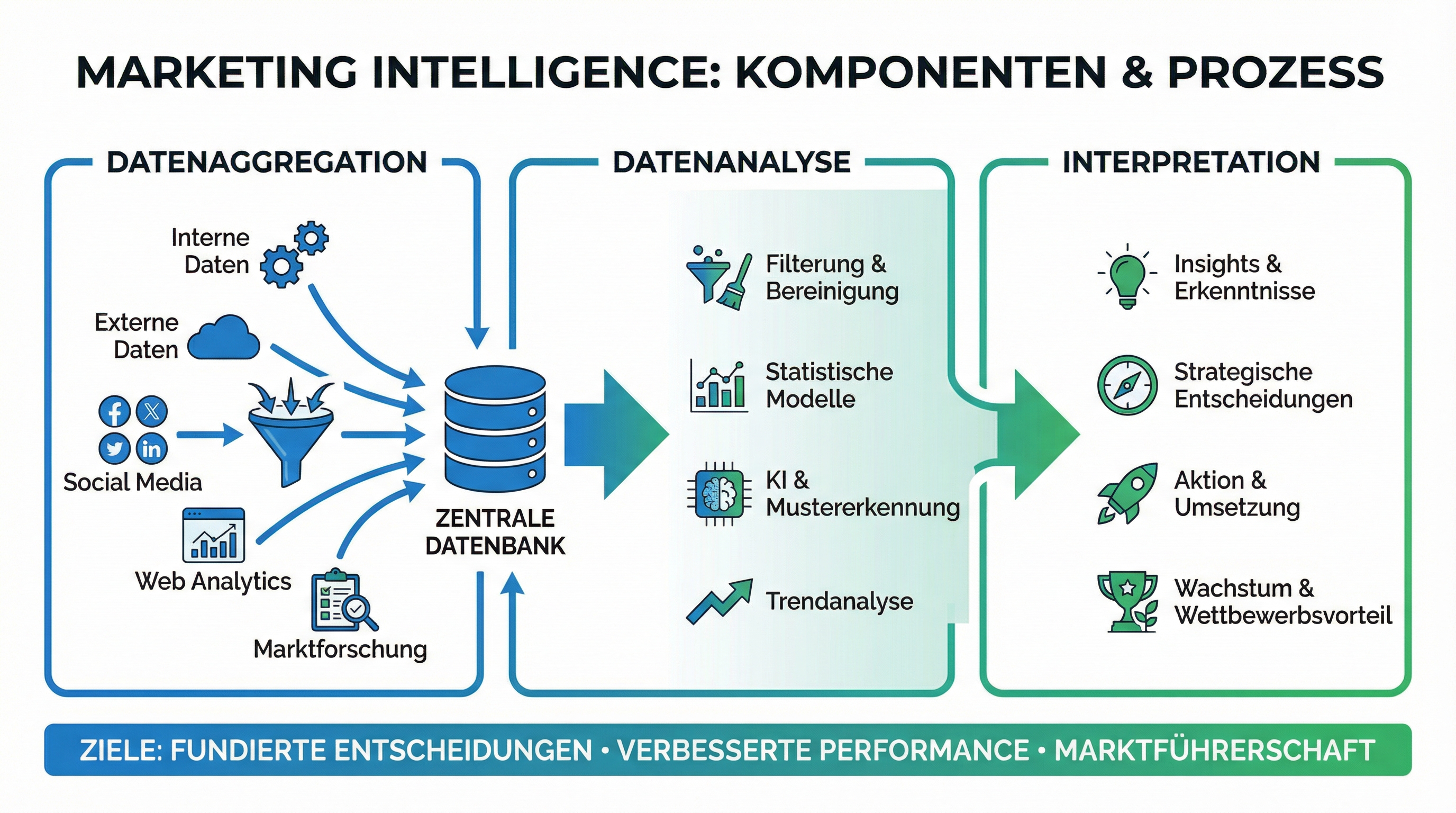
The core elements of marketing intelligence include:
Data aggregation: Collecting data from internal and external sources such as CRM systems, social media platforms, and market research reports.
Data analysis: Applying statistical methods and algorithms to identify patterns and trends.
Interpretation and recommendations for action: Translating insights into concrete recommendations that support strategic decision-making.
A practical example: A company might discover through marketing intelligence that a specific product performs particularly well in a certain region. This insight can then be used to develop targeted marketing campaigns or to expand the product offering.
Difference from traditional market research
Compared to traditional market research, which is often time-consuming and costly, marketing intelligence offers a more dynamic and continuous form of analysis. Traditional market research typically focuses on specific questions and uses methods such as surveys or focus groups. Marketing intelligence, by contrast, relies on real-time data and is able to respond quickly to changes in the market.
Another advantage of marketing intelligence is the integration of AI-driven technologies, which make it possible to process large volumes of data efficiently and gain deeper insights. This leads to more precise and faster decision-making, which is critical in today’s fast-paced business environment.
In summary, marketing intelligence is an essential tool for modern companies seeking to succeed in a highly competitive market. It enables organizations not only to act on data, but to use it strategically in order to secure long-term success.
The Role of AI in Marketing Intelligence
Marketing intelligence has evolved rapidly in recent years, and one of the key drivers of this development is artificial intelligence (AI). AI is not only changing how data is collected and analyzed, but also how companies make strategic decisions. Let us take a closer look at how AI is integrated into marketing processes and what impact this has.
Integration of AI into marketing processes
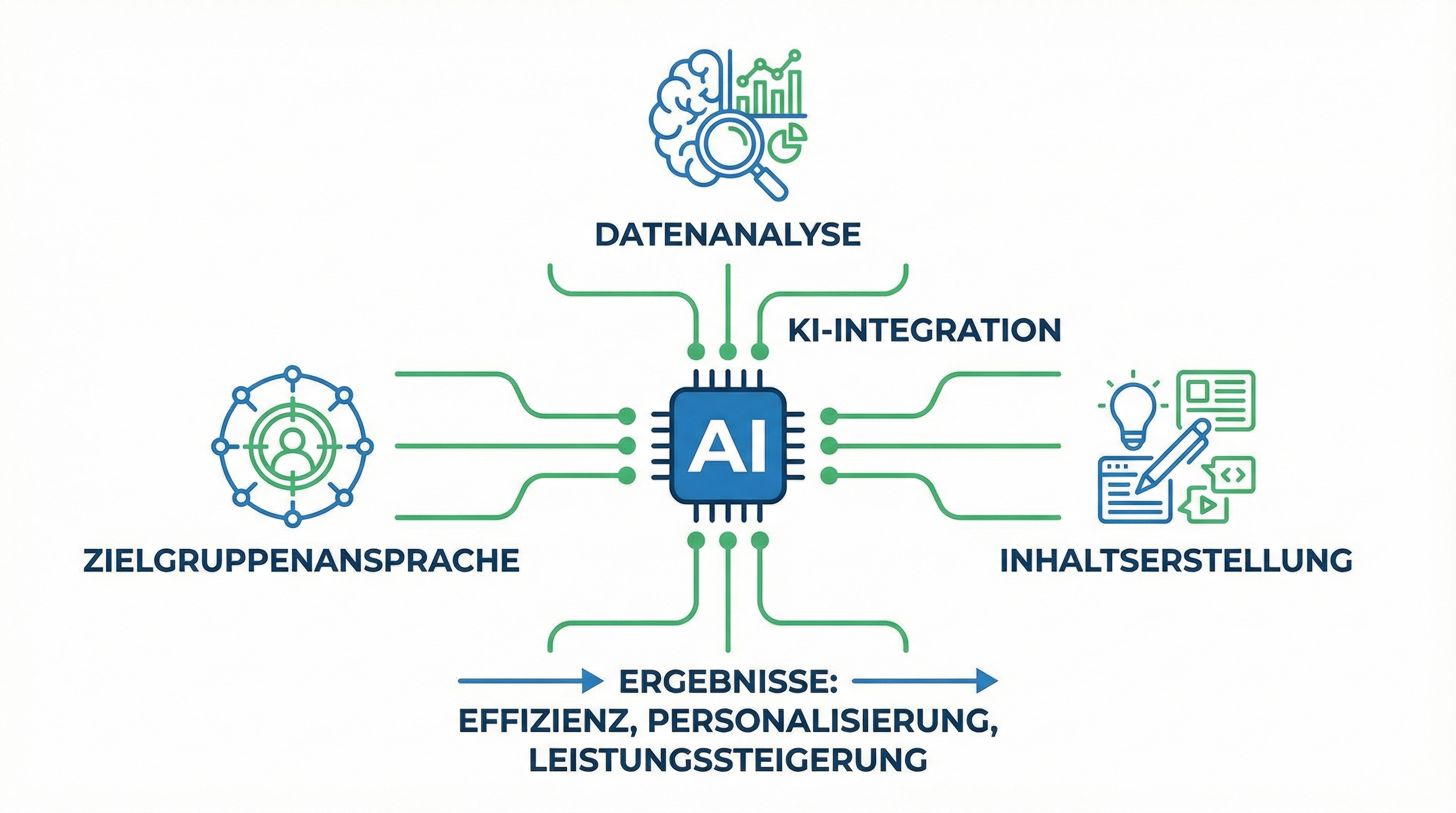
In 2026, AI is no longer just an additional tool, but deeply embedded in all aspects of marketing work. It operates in the background like electricity and has become so natural that it often goes unnoticed. One example is the automation of precision marketing. AI algorithms analyze vast amounts of data in real time and help companies segment their target audiences more accurately and deliver personalized content. This automation enables marketers to work more efficiently and respond more quickly to market changes.
Examples of AI applications in marketing intelligence
AI is used in marketing intelligence in many different ways. One of the most notable applications is customer journey mapping. Here, AI-driven insights are used to track the customer journey in real time and generate valuable insights. Another example is programmatic advertising, where AI selects and optimizes the best advertising placements in real time. AI also plays a major role in content creation, supporting the generation of creative content based on the specific interests of the target audience.
Advantages and disadvantages of using AI
The advantages of using AI in marketing intelligence are numerous. It enables faster and more accurate data analysis, which leads to better strategic decisions. In addition, it can automate repetitive tasks, allowing marketers to focus on more creative and strategic activities. However, there are also challenges. One of the biggest is data quality. AI is only as good as the data it processes. Poor or incomplete data can lead to flawed analyses. There is also the risk that companies rely too heavily on AI and neglect human intuition and creativity.
In summary, AI has revolutionized marketing intelligence. It offers enormous opportunities, but also requires a shift in how data is used and interpreted. Companies that find the right balance can take their marketing strategies to a new level.
Challenges in Implementing Marketing Intelligence
Implementing marketing intelligence is an ambitious undertaking that presents many companies with significant challenges. Although the benefits are clear, there are several obstacles that make effective adoption difficult.
Data overload and decision-making
One of the central problems is data overload. Companies today have access to more data than ever before. However, this abundance of information does not automatically lead to better decisions. In fact, 72 percent of in-house marketers and 55 percent of agency marketers report difficulties in turning this data into actionable insights. The reason is often a lack of clear structures and processes to interpret data meaningfully. The result is frequently a form of “data paralysis,” where the sheer volume of information leads to uncertainty and stalled decision-making.
Integration of data sources
Another major hurdle is the integration of different data sources. In many organizations, data is stored in silos, making it difficult to gain a holistic view of customer interactions. The challenge lies in connecting and harmonizing disparate data sources in order to create a complete picture. Without this integration, the potential of marketing intelligence remains largely untapped.
Cultural and organizational barriers
Cultural and organizational barriers should not be underestimated. Many companies show a certain resistance to change. Established processes and mindsets are not easily abandoned. In addition, many marketers feel trapped in a “B-performance cycle,” in which they focus on describing past performance rather than actively shaping the future. This reluctance can hinder innovation and the adoption of new technologies.
To overcome these challenges, a shift in mindset is required. Companies must invest not only in technology, but also in training their employees to increase data literacy. The goal is to foster a culture of curiosity and experimentation in which data is seen as a valuable tool for decision-making. Only then can the full potential of marketing intelligence be realized.
Best Practices for Successful Marketing Intelligence
Imagine having access to a vast ocean of data but no compass or map. That is exactly how many marketers feel when confronted with an overwhelming amount of information. To unlock the full power of marketing intelligence, proven best practices are essential. Let us take a closer look at some of these strategies.
Data quality and integration
First and foremost, nothing works without clean and well-integrated data. Data quality is fundamental. If you work with inaccurate or incomplete data, your insights will be unreliable at best. Think of building a house on an unstable foundation. It will not stand for long. That is why it is crucial to regularly check data for accuracy and convert it into consistent formats. Seamless integration of data from different sources makes it possible to gain a complete picture and make well-informed decisions.
Use of dashboards and real-time insights
Dashboards are like the cockpit of an airplane. They provide an overview of all key metrics at a glance. But caution is needed. A dashboard is only as good as the data it displays. It should not only show past performance, but also deliver real-time insights that enable immediate action. This allows marketers to respond quickly to changes and adjust their strategies to remain competitive.
Training and upskilling marketers
A frequently overlooked aspect is continuous training and development for marketers. Even the best tools and data are of little use if the team does not know how to use them effectively. Regular training helps increase data literacy and fosters a culture of curiosity. The goal is to empower marketers not only to read data, but also to ask the right questions and develop innovative solutions.
Conclusion
Marketing intelligence is a powerful tool, but it can only be used effectively when the fundamentals are in place. Ensuring data quality, leveraging real-time insights, and continuously upskilling marketers all contribute to enabling companies to act proactively rather than reactively. Remember, the key to success lies not only in the data itself, but in the ability to use it wisely.
Case Studies: Successful Applications of Marketing Intelligence
Marketing intelligence is a powerful tool that helps companies make informed decisions. To illustrate its potential, let us look at two compelling case studies that show how organizations have successfully applied this approach.
Example 1: A large retail company
A leading retail company faced the challenge of managing its inventory more efficiently while simultaneously increasing customer satisfaction. By implementing marketing intelligence, the company gained real-time insights into customer behavior. Using data analytics tools, it identified trends in purchasing habits and adjusted its inventory management accordingly.
The result was a significant reduction in inventory costs and improved product availability, leading to higher customer satisfaction. This case study shows how marketing intelligence can increase efficiency while also enhancing the customer experience.
Example 2: A successful online campaign
Another example is an online campaign run by a mid-sized company aiming to increase brand awareness. By using marketing intelligence tools, the company was able to precisely segment its target audience and deliver personalized content. The campaign leveraged AI-driven insights to determine the best times to publish content and maximize engagement.
The results were impressive. The campaign achieved a 30 percent higher click-through rate and a 20 percent higher conversion rate compared to previous campaigns. This case study highlights the importance of data-driven decisions and personalized content in digital marketing.
Key takeaways and results
Several important lessons can be drawn from these case studies. First, integrating marketing intelligence into business processes can lead to significant efficiency gains. Second, personalized marketing strategies based on robust data analysis can substantially improve customer loyalty and satisfaction.
These examples make it clear that success does not lie merely in collecting data, but in the ability to transform that data into actionable strategies. Companies that use marketing intelligence effectively are better equipped to succeed in a highly competitive market environment.
Conclusion: The Future of Marketing Intelligence
Marketing intelligence has evolved rapidly in recent years and will continue to play a central role in marketing in the future. The ability not only to collect data, but to turn it into actionable strategies, is critical for success in an increasingly competitive market environment. But what does the future of this discipline look like?
First, it must be acknowledged that despite the abundance of available data and tools, many marketers still feel as though they are operating “blind.” According to a study by Funnel.io, 72 percent of in-house marketers and 55 percent of agency marketers struggle to convert data into actionable insights. This shows that the challenge lies not in the volume of data, but in the ability to interpret and use it effectively.
Looking ahead, the integration of artificial intelligence into marketing strategies will continue to increase. AI is no longer viewed as a separate tool, but is already embedded in every aspect of marketing work. This development will enable marketers to create even more precise and personalized strategies. Imagine being able to generate a detailed, personalized marketing strategy at the push of a button, based on real-time data. This is no longer just a vision, but already a reality.
In the coming years, it will be crucial for companies not only to invest in technology, but also in training their employees to use these technologies effectively. The key lies in combining technological progress with human judgment. Only in this way can marketers break out of the “B-performance cycle” and drive true innovation.
In conclusion, the future of marketing intelligence will not be defined by technology alone, but also by culture and change. Companies that are willing to question established practices and explore new approaches will be the ones that succeed in the digital age. The future of marketing intelligence is promising, but it requires courage, adaptability, and a clear vision.